
You paid someone to build your website. Or maybe you built it yourself on a weekend. Either way, it looked good when it launched. It had your services, your bio, a contact form, maybe a few blog posts. You moved on to running your business.
That was months ago. Maybe longer.
Since then, you haven't thought much about the website. Why would you? It's there, it's live, it works. Except — does it? When was the last time you checked?
Websites don't stay in the condition you left them. They quietly deteriorate. Links break when other sites change their URLs. Pages slow down as your hosting environment shifts. Security certificates expire. Plugins update and create conflicts you never hear about. None of this is your fault, and none of it is obvious. It just happens.
The problem is that by the time you notice — if you ever do — the damage has been compounding for months.

What invisible problems actually look like
These aren't abstract technical issues. They're concrete situations where someone is trying to hire you and your website gets in the way.
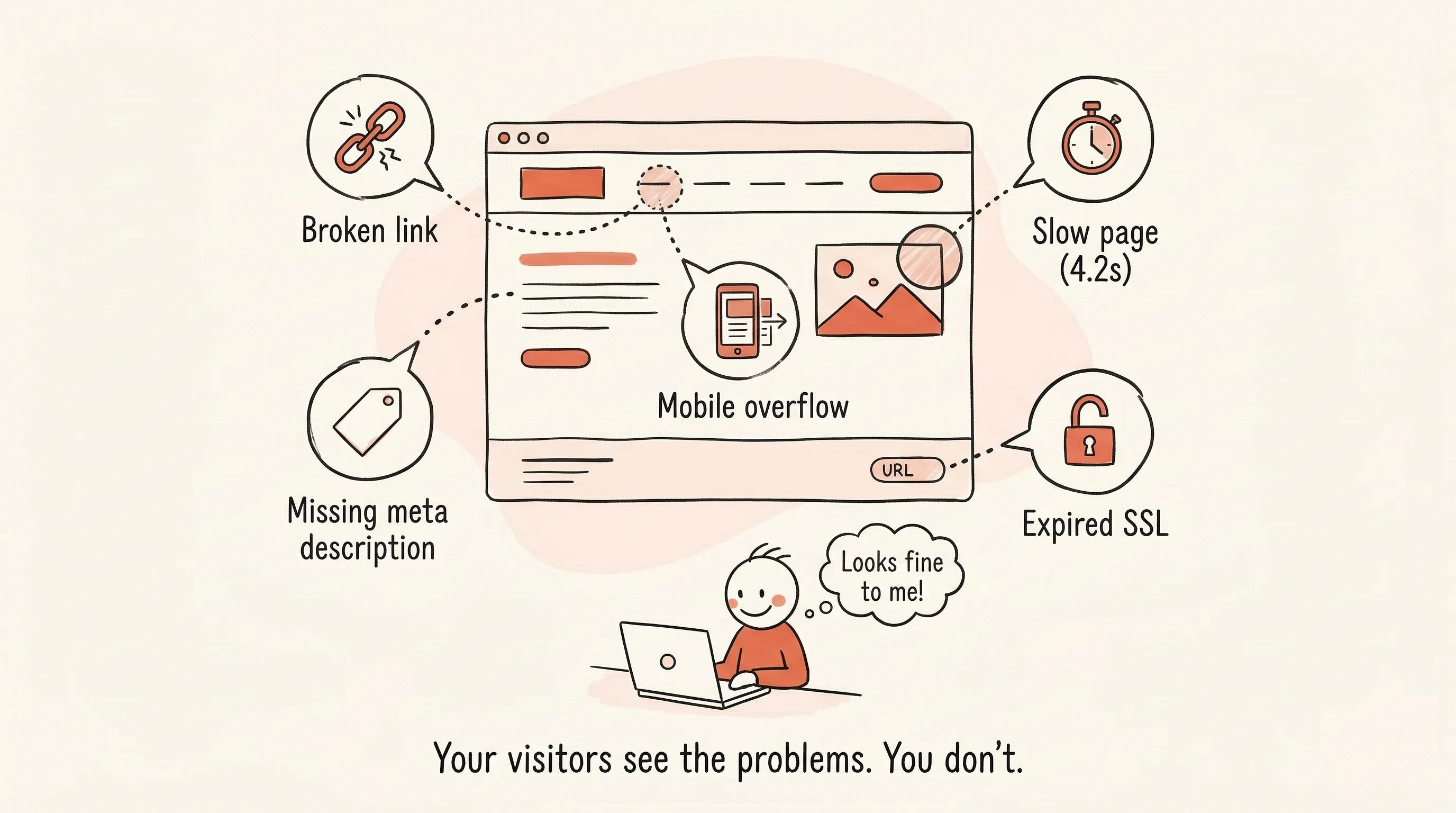
A potential client clicks the "Work With Me" button on your Services page. It goes to a page that doesn't exist anymore — maybe you restructured your offerings and forgot to update the link. They see an error page. They don't try again. They go back to Google and click the next result.
Someone finds one of your blog posts through search. The page takes seven or eight seconds to load because images that were fine two years ago are now too large for your current hosting setup. They don't wait. The back button is right there.
A visitor lands on your homepage and their browser shows a "Not Secure" warning at the top. Your SSL certificate expired and nobody told you. They don't read the rest. They don't trust a site their browser is actively warning them about.
Each of these scenarios plays out without you ever knowing. There's no notification. No email from the visitor saying "your site is broken." They just leave. And you chalk up the quiet month to "slow season" or "maybe I need better ads."
Why you never hear about it
This is the most frustrating part: the feedback loop is completely silent.
When someone walks into your physical location and the door is jammed, you know immediately. When your phone system goes down, you hear about it within hours. But when your website has problems, visitors don't complain — they just disappear.
Google doesn't send you a note saying "we ranked you lower this month because of broken links and slow pages." Your hosting company doesn't alert you when your site starts loading slowly. The people who leave your site don't fill out a feedback form explaining why.
The only signals are indirect. Fewer form submissions. Fewer calls from the website. Fewer people mentioning they found you online. And those signals are easy to attribute to other things — your marketing, your pricing, the economy — when the real problem might just be a few broken links and a slow homepage.

What to actually check
The good news is that the list of things that matter is short. You don't need to run a full technical audit or learn web development. Here's what's worth monitoring:
Broken links — Links on your site that lead to pages that no longer exist, either on your own site or on external sites you've linked to. These create dead ends for visitors and signal to Google that your site isn't well-maintained.
Page speed — How fast your pages load, especially on mobile. If a page takes more than a few seconds, most visitors will leave before it finishes loading. This tends to degrade gradually as images accumulate and hosting conditions change.
Uptime — Whether your site is actually accessible. Hosting outages happen, sometimes for minutes, sometimes for hours. If your site is down during a period when someone is searching for your services, you lose that opportunity permanently.
Security (SSL) — Whether your site has a valid security certificate. When it expires or isn't configured correctly, browsers show a "Not Secure" warning that makes your business look untrustworthy.
These aren't things you need to check daily. But quarterly at minimum — and ideally, you shouldn't have to remember to check at all.
Automate the worry away
The realistic solution for someone running a coaching practice or consulting business isn't "add website monitoring to your weekly to-do list." You already have too many things on that list. The realistic solution is something that watches your site in the background and only interrupts you when there's an actual problem to deal with.
Not a 47-page audit report you'll never read. Not a dashboard full of scores and grades you don't understand. Not weekly summary emails that go straight to your archive folder.
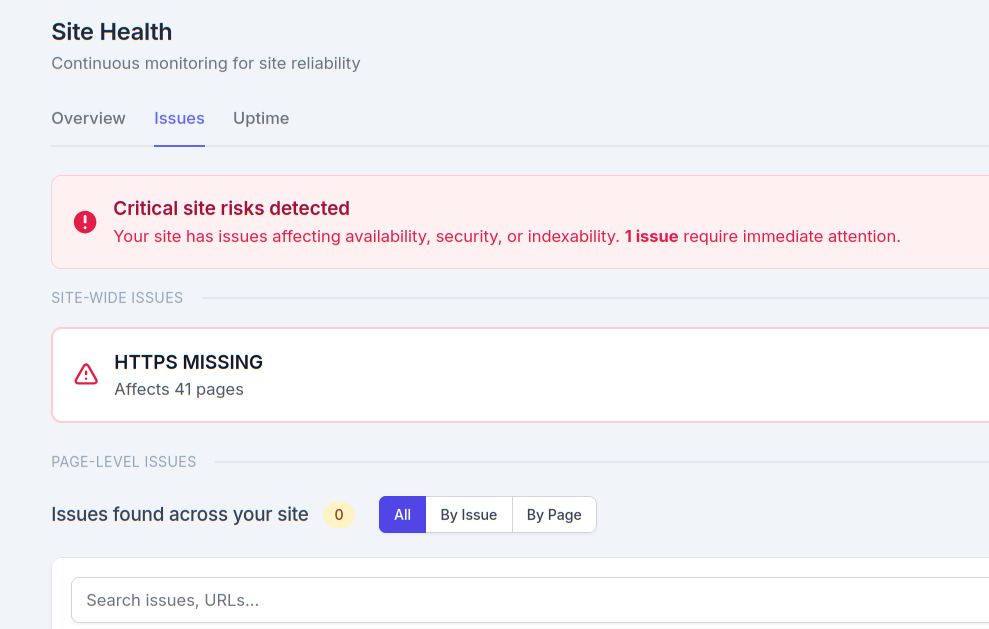
What you need is a straightforward alert: "Your Services page has a broken link" or "Your homepage is loading slower than usual." Something specific enough to act on, explained in language that doesn't require a web development glossary.
This is what SitePerfector's technical health checks are built to do. Automatic scans run in the background — you don't trigger them, schedule them, or think about them. When something needs your attention, you get a plain-language notification telling you what's wrong, which page is affected, and what to do about it. When everything's fine, you hear nothing.
Fix the issue — or forward the alert to your web person if you have one — and move on with your day. Your site stays healthy. Your visitors keep having a good experience. And you never had to learn what an SSL certificate is or how to read a performance waterfall chart.
Your website is working for you around the clock. It should also be watched around the clock — just not by you.